🎓 Skills Your Child Will Develop
- 📚 Early Literacy Foundation — Daily shared reading, access to books, and language-rich environments at home are the most powerful predictors of reading success — and parental reading habits shape children's reading identities for life.
- 💬 Language & Communication — Rich parent-child conversation — especially expanded responses to children's observations and questions — is the single most powerful driver of vocabulary growth and language development available.
- 💪 Resilience & Grit — Children whose parents normalize struggle, celebrate effort over outcome, and model recovery from failure develop the resilience and perseverance that predict success in school, relationships, and professional life.
- 🧠 Self-Regulation Skills — Children whose parents respond to big emotions with empathy and calm guidance learn to regulate their own emotional responses — one of the most important predictors of school success and long-term wellbeing.
Although your preschooler may not learn to read until kindergarten or first grade, their love of reading and enjoyment of books is learned early on. There's no better way to prepare your child for preschool and kindergarten then to develop that love of reading. Here are ten tips to help you teach your preschooler to love books and reading:
Read to your preschooler as often as possible.
You've heard this statement over and over again. Why? It's been repeated because it is at the core of the learning process for reading. Read books to your preschooler every day. If you're having difficulty finding time to read, try incorporating it into your daily routine. For example, read prior to naps and bedtime. You may even want to set a number of books you will read. But leave it up to your preschooler as to which books and how many you actually do read. If the interest is there, keep reading! If they're extra tired that day, keep the reading to a minimum.
Make reading fun by altering your voice and using expressions.
Have you ever had an English teacher read a book in monotone? Boring! Your preschooler's interest is no different. When reading the lines of the characters, use a different voice. If they're animals, use a silly voice. And don't forget to use facial expressions. Nothing makes children laugh more than funny facial expressions. Become the characters. Act as if it's a play. Use your hands, arms, eyebrows and eyes. It's okay -- no one's watching!
Get your preschooler to repeat the phrases.
Many books for preschoolers have phrases that repeat throughout the story. Use this to get your preschooler involved. Have your preschooler repeat the phrases after you've read them. This is not only fun for your preschooler, but it also keeps their attention.
Read books -- over and over and over again.
Every child has a favorite book that they want read repeatedly. Although this may bore the every-loving pants off of you, they love it! Before long, you may find that your preschooler has memorized the book from cover to cover! This makes the experience even more fun because you can use it for boring times in the car. The next time you're heading to the post office in your car, begin reciting the book; I bet your preschooler joins in!
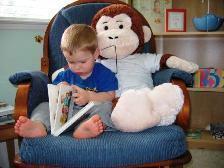 Take a break and let your preschooler "read".
Oh, don't be so sure that only you know the story! Your preschooler has a memory and imagination, too. Take a break during the next story time and let your preschooler "read" the book. Okay, so it won't actually be the true story of the book, but you never know, you may learn a whole new version you never knew existed!
Have your preschooler guess what's next.
The next time you're reading a book to your preschooler, ask them what will happen next. Can they remember? Boy, this will get the cogs turning! Drop a hint if you have to. Ask them to point out images within the pictures. Who are the characters? What are their names? Reading books can be so much fun when you just add a little creativity to what you can do with them.
Visit the library often and encourage your preschooler to select books.
Take your preschooler to the library on a regular basis. For instance, schedule it into your routine to visit your local library each week on a particular day. Mark your family calendar so your preschooler will know when library day is coming. Remind your preschooler of the coming day and discuss what both of you will do there. When you get to the library, let your preschooler select books of their interest. To make sure you get a few good story books that are age appropriate, select a few you think your preschooler will enjoy.
Keep story time short.
Reading for ten minutes is a good length. You don't want your preschooler to become bored or uninterested and begin to dislike reading. A good guide for determining a time period that's suited to your preschooler is to watch for signs of boredom. When they begin to lose interest, finish the story and end on a good note.
Make "home-made" books with your preschooler.
Get creative! Use crayons, markers or even chalk. If you want to make it a day project, have you preschooler cut out photos from old magazines or calendars, or even family photos, and then glue the photos to the pages of the book. If your preschooler has difficulty writing, try having your preschooler narrate the story to you and you can write the story. Bind it with yarn, string, fasteners or staples. If you'd like to make the book a special keepsake, consider using a print-on-demand (POD) publisher to have the book professionally bound.
Re-Use old books and decorate with new ones.
Learning to love books goes beyond just reading them. Consider decorating with them. Take the book jackets of your preschooler's favorite hardback books, frame them, and then hang them on the walls of your preschooler's bedroom or playroom. Or, re-use old hardback books that have broken from the spine to make new books. Simply cover them with paper or book covers or paint them. Add your preschooler's story inside. Voilá, you've made a brand new book!
Raising a Reader - Preschool Rock Moms Radio Show
Listen to Preschool Rock Moms hosts, Stacey Lloyd and Joanna Young, discuss "Ten Tips to Get Your Preschooler Reading" with guest Tabatha D'Agata, a mom and children's book author. Visit or listen now!
.
